Build your emergency kit step by step
A calm walkthrough of what's good to have at home – without buying everything at once.
By Nordic Ready Guide · Published · Updated
The goal: manage for a week at home
The authorities recommend that all households should be able to manage on their own for at least a week if electricity, water, heating or the mobile network stops working. That sounds like a lot, but it comes down to a few basic needs: water, food, warmth and information.
You do not need to buy everything at once. Build up your preparedness at a calm pace – a little at a time is better than nothing at all. Here is a simple way to do it in four steps.
Step 1: Work out what you need
How much you need depends on how many you are. In our emergency kit calculator you enter the number of adults, children, babies and pets and see straight away how much water, food and cash your household needs for a week – or for the number of days you choose. Every figure can be changed.
An example: two adults need at least 42 litres of drinking water for a week (3 litres per person per day). The authorities count on 3–5 litres, and with 5 litres it comes to 70 litres.
Step 2: Start with what you already have
Look through your home before buying anything. Many people already have a torch, blankets, sleeping bags, tinned food and bottles that can be filled with water. Gather them in one place and make a note of what is missing – that is your shopping list.
Use our emergency kit checklist to tick off what you have.
Step 3: What you need
- Water: at least 3 litres per person per day, plus containers for fetching more.
- Food: food that keeps well and can be eaten cold or prepared simply, such as tinned food, crispbread, nuts and muesli. See our list of food for your emergency kit.
- Warmth: blankets, sleeping bags, hats and warm clothes.
- Information: a radio that works without mains electricity (battery, hand crank or solar) and receives FM, so you can hear VMA (Sweden's public warning messages) on Sveriges Radio P4.
- Light and charging: a torch or head torch, spare batteries and a charged power bank. Read more in Headlamps and torches for your emergency kit.
- First aid: a first aid kit, over-the-counter medicines and your own medicines. The National Board of Health and Welfare advises keeping a month's supply of medicines you take regularly. See Home first aid kit – what to keep
- Cash: the Riksbank advises keeping cash for about a week of essential purchases, around SEK 1,000 per adult, preferably in small denominations.
- Paper: a list of important telephone numbers, since your phone may run out of battery.
Step 4: Build your kit over four weeks
It is easier if you spread out the shopping. A suggestion:
- Week 1 – water: fill clean bottles with tap water and get one or two water containers. See Storing water at home.
- Week 2 – food: buy things you already eat that keep well and can be eaten without cooking. Eat and replace them at your normal pace, so nothing goes out of date.
- Week 3 – warmth and light: blankets, sleeping bags, lights and batteries. Read Keeping warm without power.
- Week 4 – information and backup: radio, charged power bank, first aid kit, cash and the list of telephone numbers.
Think about the whole household
Adapt the kit to the people who live with you:
- Children and babies: baby formula or gruel, baby food, nappies and something to keep them occupied.
- Pets: water, food and any medicine. Base it on what the animal usually eats in a week.
- Special needs: special diets, allergies and aids. If someone depends on equipment that needs electricity, talk to their healthcare provider about what to do during a longer outage.
- Neighbours: think about whether someone nearby might need help, such as an older neighbour who lives alone.
Storage and maintenance
Store your emergency kit somewhere cool and dry, where everyone in the household can find it.
Set a calendar reminder a couple of times a year: replace the water, eat and replace food before its best-before date, charge power banks and check that the radio and lights work.
Consider packing the most important things in a bag you can take with you if you have to leave home – see Evacuation bag.
Good to know
Download the Krisinformation app and allow notifications to receive VMA (Sweden's public warning messages) directly on your phone. Official information about home preparedness is available at krisinformation.se and from the Swedish Civil Defence and Resilience Agency (formerly MSB).
Frequently asked questions
What should an emergency kit contain? Water, food that keeps well, something to keep you warm, a radio that works without mains electricity, light and charging, first aid, your own medicines and cash. The full list is in our checklist.
How much water do you need in an emergency kit? At least 3 litres per person per day for drinking and cooking – the authorities count on 3–5 litres. A family of four therefore needs at least 84 litres for a week. Work it out for your household in the emergency kit calculator.
How long should an emergency kit last? At least a week, according to the authorities' advice. Having more at home is only a good thing.
Do you have to buy a ready-made emergency kit? No. Many people already have most things at home, and you can build up the rest at a calm pace. A ready-made kit can be a good start – read Ready-made emergency kits – what is included and what do they cost?
Where should the emergency kit be kept? Somewhere cool and dry that everyone in the household knows about and can reach easily – even in the dark.
How often should you check the emergency kit? A couple of times a year. Replace water and food that will soon go out of date, charge power banks and test the radio and lights.
Products in this guide
Sandberg Survivor Radio All-in-1 5000
All-in-one, lowest price among the radios · ca 680 kr
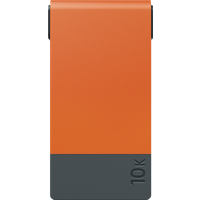
GP Powerbank M2 10000
Good size for the emergency kit · ca 200 kr

Katadyn Micropur Quick MQ 1T
Low-cost backup, 4-year shelf life · ca 149 kr

GSI Outdoors Water Cube 10 L
Easy to carry · ca 208 kr
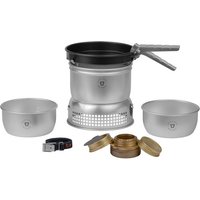
Trangia Stormkök 27-3 UL
One to two people · ca 649 kr
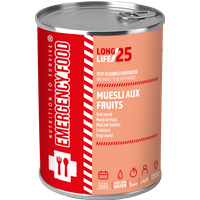
Emergency Food Fruktmüsli (5 portioner)
Breakfast without a stove · ca 299 kr
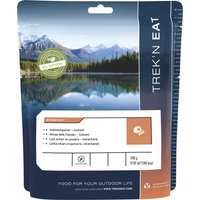
Trek'n Eat Whole Milk Powder Instant
Milk that keeps in the emergency kit · ca 145 kr
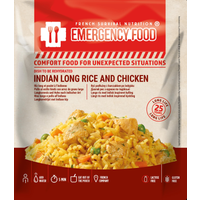
Emergency Food Indian Long Rice and Chicken (1 portion)
Longest shelf life for the emergency kit · ca 129 kr
Prices are approximate and may change. Always check with the retailer.
Prices at Outnorth were checked on 24 November 2026.
Sources
Read also: Emergency kit for the car – what should you keep in the car in winter? · Evacuation bag – packing list if you have to leave home · Ready-made emergency kits – what is included and what do they cost?
Related guides
Evacuation bag – packing list if you have to leave home
Your emergency kit helps you cope at home. But if you have to leave home quickly, you need a bag you can carry. Here is a packing list based on the Swedish authorities' advice – with example bags and gear and their prices.
Read guideEmergency kit & preparednessReady-made emergency kits – what is included and what do they cost?
A ready-made emergency kit is a quick way to get started with home preparedness. But kits vary considerably in price and contents – and none of the kits we have compared includes food. Here you can see what you get for your money, and when it pays to build your own.
Read guideEmergency kit & preparednessFood for your emergency kit – what do you need for a week?
During a longer power cut or another crisis, every household is responsible for its own food and water. The goal is to manage at home for at least a week. Choose food that keeps at room temperature, can be eaten cold or prepared simply – and that you actually like.
Read guide